
Digital Marketing: A Complete Beginner’s Guide to Online Business Growth
Introduction
In today’s fast-paced digital world, traditional marketing alone is no longer enough. Consumers now spend most of their time online—searching for solutions, browsing social media, watching videos, and shopping digitally. Businesses that fail to adopt digital marketing risk losing visibility, credibility, and revenue.
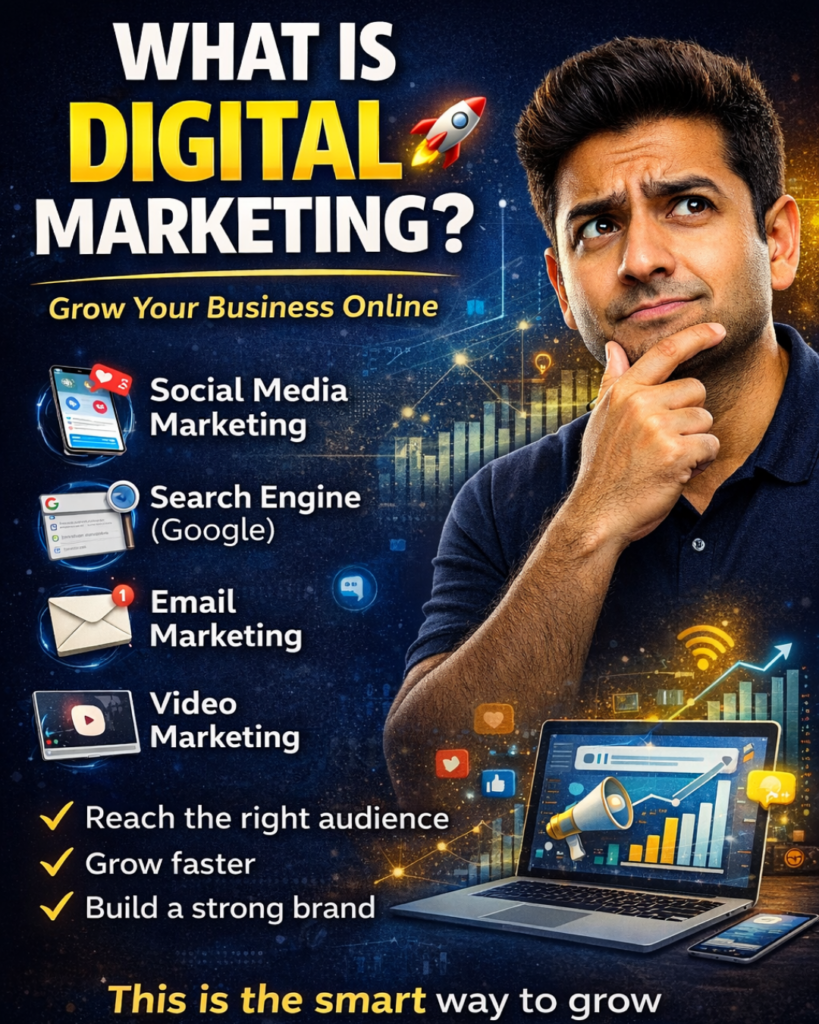
Digital marketing is the process of promoting products, services, or brands through online platforms like search engines, social media, websites, email, and digital advertising. It allows businesses to connect with their target audience at the right time, track campaign performance, and scale growth efficiently.
This guide will cover everything a beginner needs to know about digital marketing: why it matters, the different types, step-by-step implementation, benefits, strategies, common mistakes, future trends, and actionable tips for growing your business online. By the end, you’ll have a comprehensive roadmap to succeed in the digital space.
1. Why Digital Marketing Matters in 2026
Digital marketing has become the backbone of modern business strategies, and in 2026, its importance is stronger than ever. Here’s why:
- Online Presence Is Mandatory – With billions of people online daily, businesses need to be visible on search engines, social media, and websites to attract and retain customers.
- Cost-Effective Marketing – Unlike traditional methods such as TV, radio, or print, digital marketing offers measurable and scalable campaigns that fit almost any budget.
- Targeted Audience Reach – Digital platforms allow businesses to target specific demographics, interests, and online behaviors, ensuring marketing efforts reach the right people.
- Real-Time Performance Tracking – With analytics tools, you can monitor website traffic, ad performance, social engagement, and conversions in real time, enabling immediate improvements.
- AI and Automation – Tools powered by artificial intelligence help personalize campaigns, predict customer behavior, and save time on repetitive tasks, making marketing more efficient and impactful.
- Competitive Advantage – Businesses leveraging digital marketing stay ahead of competitors by engaging customers directly, building trust, and offering solutions online.
Example: A small startup selling eco-friendly products can reach a global audience via social media and Google Ads, something impossible with traditional marketing alone.
2. Types of Digital Marketing
Digital marketing is not a single strategy—it’s a combination of several techniques working together. Here’s a detailed look at each type:
2.1 Search Engine Optimization (SEO)
SEO focuses on improving a website’s visibility in search engine results pages (SERPs). Businesses use SEO to attract organic traffic and long-term growth.
- On-page SEO: Optimizing web pages with relevant keywords, headings, meta tags, and internal links.
- Off-page SEO: Building high-quality backlinks to increase domain authority and credibility.
- Technical SEO: Improving website speed, mobile responsiveness, URL structure, and schema markup.
Example: If someone searches “best digital marketing agency in India,” SEO ensures your website appears at the top, increasing visibility and potential leads.
2.2 Social Media Marketing (SMM)
SMM involves using social media platforms like Instagram, Facebook, LinkedIn, YouTube, and Twitter to build brand awareness and engage with audiences.
- Organic SMM: Sharing content, engaging with followers, and creating communities around your brand.
- Paid SMM: Running targeted ads to reach specific audiences and achieve measurable goals.
Example: A fitness brand posting workout videos and nutrition tips on Instagram can attract thousands of followers and potential customers.
Tips for Beginners:
- Focus on platforms where your audience is most active
- Use high-quality images and videos
- Engage with comments and messages regularly
2.3 Content Marketing
Content marketing is about creating valuable and relevant content to attract and retain customers. Types of content include:
- Blog posts
- Videos and reels
- Infographics and visual guides
- E-books and downloadable resources
Content marketing helps:
- Build trust with your audience
- Improve SEO rankings
- Generate leads through informative content
Example: A digital marketing agency writing a blog about “Top 10 Social Media Strategies for 2026” can attract users searching for marketing tips.
2.4 Pay-Per-Click Advertising (PPC)
PPC is a paid strategy where advertisers pay for each click on their ads. Platforms include Google Ads, Facebook Ads, and Instagram Ads.
- Quick results and instant traffic
- Highly targeted campaigns based on demographics, interests, and behavior
- Easily measurable ROI and performance tracking
Example: A local bakery running Google Ads for “custom birthday cakes near me” can receive immediate orders from local customers.
2.5 Email Marketing
Email marketing is a direct communication channel with your audience. It allows businesses to:
- Nurture leads
- Promote products or services
- Build long-term relationships
Tips for effective email marketing:
- Personalize subject lines and content
- Segment your audience for better targeting
- Include clear calls-to-action (CTAs)
Example: Sending monthly newsletters with discounts or product updates keeps customers engaged and encourages repeat sales.
2.6 Affiliate Marketing
Affiliate marketing is performance-based, where partners promote your products and earn commissions for sales or leads.
- Expands reach without upfront marketing costs
- Works through bloggers, influencers, and affiliate networks
- Effective for e-commerce and online courses
Example: An online education platform partnering with bloggers to promote courses, paying them per signup or sale.
3. How Digital Marketing Works (Step-by-Step)
- Market Research: Understand your audience, competitors, and market trends.
- Target Audience Identification: Define demographics, interests, and online behaviors.
- Strategy Creation: Decide which channels and content types to use.
- Content Creation: Design blogs, videos, social posts, and ads.
- Promotion & Advertising: Execute campaigns on SEO, social media, PPC, and email.
- Tracking & Optimization: Measure results and refine strategies to maximize performance.
Example: A startup selling eco-friendly products researches its audience, creates educational content about sustainability, runs Instagram ads, and tracks conversions to optimize campaigns.
4. Benefits of Digital Marketing
Digital marketing offers multiple advantages over traditional marketing. Here’s why businesses prioritize it today:
1. Cost-Effective
Digital marketing allows businesses to reach a larger audience at a lower cost. Unlike TV, radio, or print campaigns, online marketing campaigns can start with small budgets and scale gradually.
Example: A small business can run Facebook Ads for as low as $5/day, reaching hundreds or thousands of potential customers.
2. Measurable Results
With tools like Google Analytics, Facebook Insights, and HubSpot, businesses can track clicks, impressions, leads, conversions, and ROI. This data allows marketers to make data-driven decisions.
Example: Tracking how many visitors clicked a “Buy Now” button on your website helps optimize campaigns for better results.
3. Global Reach
Unlike traditional marketing, which is often location-bound, digital marketing allows businesses to target audiences worldwide.
Example: A handmade jewelry seller in India can sell products to customers in the US, UK, or Australia via Instagram, Google Ads, or an e-commerce website.
4. Better Engagement
Digital marketing allows direct interaction with customers through social media, email, live chats, and comments. This engagement builds brand loyalty and encourages repeat sales.
Example: Replying to customer queries on Instagram stories or Facebook messages creates trust and strengthens the relationship.
5. Data-Driven Decisions
Every campaign can be analyzed using analytics to improve performance. This ensures that marketing efforts are not based on guesswork but on measurable insights.
Example: A PPC campaign that underperforms in one region can be adjusted using real-time data to target better-performing regions.
5. Digital Marketing Strategy for Beginners
Creating an effective digital marketing strategy is critical for success. Here’s a step-by-step beginner-friendly approach:
Step 1: Set Clear Goals
Decide whether your goal is:
- Brand awareness
- Lead generation
- Product sales
- Website traffic
Clear goals ensure your campaigns are focused and measurable.
Step 2: Choose the Right Channels
Select channels where your target audience is most active. Examples:
- Instagram and TikTok for younger audiences
- LinkedIn for B2B marketing
- Google Ads for search intent campaigns
Step 3: Create Quality Content
Your content must educate, entertain, or solve a problem for your audience. Types include:
- Blog posts for SEO and knowledge building
- Videos and reels for engagement
- Infographics for easy understanding
Step 4: Optimize for SEO
Use relevant keywords naturally in your content, titles, and meta descriptions to improve search engine visibility.
Example: A blog titled “Digital Marketing Tips for Small Businesses” should include related keywords like “online marketing,” “social media strategy,” and “SEO guide.”
Step 5: Track & Analyze Performance
Use analytics tools to measure clicks, conversions, bounce rate, and ROI. Optimize campaigns based on the data to improve results continuously.
6. Common Digital Marketing Mistakes to Avoid
Even experienced marketers make mistakes. Beginners should watch out for:
- Ignoring SEO – Without proper SEO, your content may never reach the audience.
- Posting Without a Strategy – Random posts without a plan confuse customers and reduce engagement.
- Not Tracking Analytics – Without tracking, you cannot improve campaigns.
- Copying Competitors Blindly – Each brand is unique; copying others may harm credibility.
- Inconsistent Branding – Visual and messaging consistency builds trust and recognition.
Tip: Always plan campaigns with objectives, content strategy, and performance tracking.
7. Future Scope of Digital Marketing
Digital marketing is evolving rapidly. Here’s what to expect in the coming years:
1. AI-Driven Campaigns
Artificial intelligence will personalize marketing, predict user behavior, and automate repetitive tasks. Tools like ChatGPT, AI content generators, and automation platforms are already transforming the industry.
2. Voice Search & Smart Devices
With the rise of smart speakers and voice assistants, optimizing content for voice search is becoming essential.
Example: Users might say, “Best digital marketing strategies for 2026,” and your content must be optimized to appear in voice search results.
3. Influencer Marketing Growth
Influencers will continue to drive brand awareness and credibility. Collaborating with niche influencers can help businesses reach targeted audiences efficiently.
4. Advanced Analytics
Predictive analytics will help businesses anticipate market trends, customer behavior, and campaign success, making marketing more strategic.
5. Career Opportunities
Digital marketing careers will remain in high demand. Roles include:
- SEO Specialist
- Social Media Manager
- Content Strategist
- PPC Expert
- Email Marketing Specialist
Note: For businesses and marketers, keeping up with these trends is critical for sustainable growth.
8. Conclusion
Digital marketing is no longer optional—it’s a business necessity. It allows businesses of all sizes to:
- Reach global audiences
- Build trust and engagement
- Generate leads and increase sales
- Track and optimize campaigns in real time
By understanding its types, benefits, strategies, common mistakes, and future trends, you can create a strong online presence and grow your business effectively in 2026 and beyond.
One-liner takeaway: “Digital marketing is the bridge between your business and the online audience ready to buy from you.”
9. Call to Action (CTA)
- Subscribe to our blog for actionable digital marketing tips
- Follow us on social media for the latest updates
- Contact us to grow your online business with expert strategies
click here to read more updates